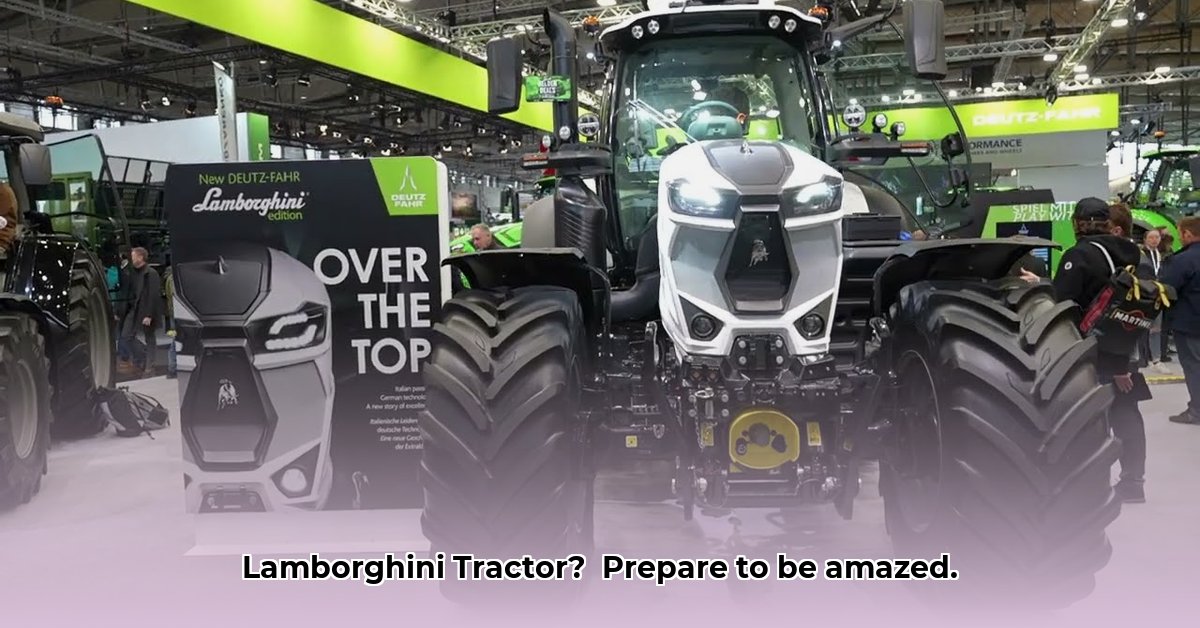
Lamborghini Tractor 2024: Will it Plow Through the US Market?
Lamborghini, renowned for its luxury sports cars, is entering the North American agricultural market with its 2024 tractor launch. This ambitious move promises powerful performance and cutting-edge technology, but will this Italian stallion conquer American farmland, or falter against established competitors? The success hinges on several key factors. For more information on Lamborghini's history, visit the Lamborghini Tractor History.
The partnership with Deutz-Fahr, a major player in agricultural machinery, provides Lamborghini immediate access to a large customer base and established distribution network. This significantly reduces market entry barriers. However, a crucial question remains: can Deutz-Fahr effectively market a luxury tractor to farmers primarily focused on practicality and ROI? Will the Lamborghini brand name alone be sufficient to sway farmers who prioritize reliability and affordability over prestige? The answer likely depends on targeted marketing that highlights the tangible farming benefits of this high-end equipment. Will this marketing strategy be sufficient to overcome the inherent challenges associated with entering this established market?
Engine power is a clear strength. Lamborghini tractors offer horsepower ranging from 135 to 340, depending on the model, potentially significantly increasing efficiency, especially for large-scale operations. This translates to potential time savings, increased acreage covered, and higher yields. In a climate of agricultural labor shortages, this high-powered efficiency could be a significant competitive advantage. However, this power comes at a considerable cost. Initial investment, fuel expenses, and potential maintenance costs could make it a financially challenging acquisition for many farmers. The crucial factor becomes the return on investment (ROI): will the efficiency gains and increased yields justify the higher initial and ongoing expenses?
Sustainability is another critical factor. While the tractor’s performance is impressive, data on its environmental impact remains limited. Fuel efficiency and emissions levels are crucial details in today's market, where environmental concerns are paramount. Transparency is vital here; a lack of readily available information on these critical aspects could significantly hinder market adoption, particularly amongst environmentally conscious consumers. How will Lamborghini address this critical need for transparency and detailed performance data?
Market reception is a major challenge. American farmers are pragmatic. Will the Lamborghini brand, strongly associated with luxury cars, resonate with farmers focused on reliability and affordability? This requires a marketing strategy that convincingly demonstrates the tractor’s practical value beyond its prestigious name. To succeed, Lamborghini must effectively communicate its unique value proposition while addressing concerns surrounding cost and sustainability. By targeting specific market segments – perhaps large-scale farms or specialized operations where efficiency is paramount – Lamborghini might improve its chances of success.
Lamborghini faces strong competition from established brands with long-standing relationships and proven track records. Success will require more than just a powerful engine and a recognizable name; a compelling marketing strategy is essential for showcasing the tractor's unique value proposition effectively. This represents a significant challenge, but not necessarily an insurmountable one.
The long-term success of the Lamborghini tractor in the US market remains uncertain. Several crucial factors will determine its fate: transparent data on sustainability, a targeted marketing strategy focusing on appropriate market segments, and competitive pricing that balances premium positioning with affordability are all essential for success. Although success is not guaranteed, the potential exists for the Lamborghini tractor to become a powerful force in American agriculture, but only through strategic planning and execution.
Actionable Steps for Lamborghini:
- Transparency on Sustainability: Publish detailed and independently verified data on fuel efficiency and emissions to address environmental concerns and build trust.
- Targeted Marketing: Focus on showcasing efficiency and technological advantages to large-scale operations and high-value farmers where ROI is readily apparent.
- Competitive Pricing: Develop a pricing model that remains competitive while reflecting the product's premium nature, potentially offering tiered pricing to meet diverse budget requirements.
How Lamborghini Tractors Compare to Competitors in Terms of Sustainable Farming Practices
Lamborghini's entry into the US market has generated significant interest. However, a key question remains: how does this high-end machine stack up against competitors regarding sustainable farming practices. This is particularly important given the growing emphasis on environmental responsibility in agriculture.
Precision Farming: A Core Advantage
Lamborghini's emphasis on precision farming is a key differentiator. Features like GPS guidance, ISOBUS compatibility, and autonomous steering optimize resource allocation, directly impacting sustainability through reduced fuel consumption, precise fertilizer application, and minimized water use. However, a direct comparison of fuel efficiency (liters per hectare) against competitors like John Deere, Case IH, and New Holland is essential for a fair assessment.
Technology and Sustainability: A Symbiotic Relationship
The tractor's technology isn't solely about increased output; it's about responsible farming. Independent verification is needed to confirm that these technological advancements genuinely reduce environmental impact and enhance efficiency. Comparative studies focusing on Lamborghini’s environmental footprint versus its competitors are crucial for a comprehensive evaluation.
The High-End Price Point: A Barrier to Entry?
Lamborghini's premium pricing is a significant barrier. Is the high price justified by its sustainability benefits? For smaller farms, the ROI might be questionable, raising concerns about equitable access to this technology. A cost-benefit analysis across various farm sizes is necessary, and leasing programs could improve accessibility.
Beyond the Machinery: The Human Factor
Operator comfort is an often-overlooked factor. Reduced operator fatigue leads to increased productivity and fewer errors – contributing to sustainability. Lamborghini's luxurious cabins enhance this. How this translates into tangible sustainability benefits warrants further research.
The Bigger Picture: Long-Term Sustainability
Lamborghini's long-term sustainability impact necessitates further investigation. While initial signs are positive, longitudinal studies tracking fuel consumption, yield improvements, and resource efficiency over multiple growing seasons will provide a clearer picture.
Key Takeaways:
- Lamborghini tractors leverage precision farming technology, potentially offering significant sustainability benefits.
- The high cost may limit accessibility for smaller farms, impacting the overall contribution to sustainable agriculture.
- Independent research comparing Lamborghini's sustainability performance to its competitors is crucial for a complete assessment.
- Future studies should focus on long-term operational costs, resale value, and the environmental footprint of Lamborghini tractors.
- The human factor – operator comfort – significantly influences sustainable farming practices.